The Academy and its participants
SCIENCE ↔ PRACTICE
Academy of Diplomatic Professions
Learning and deepening the diplomatic profession through its situations, its professional acts and its responsibilities.
Seven programmes: acquiring the profession, practising in situation, leading and deciding.
Assess a situation, prepare your written work and decisions, then reflect on your action.
Specialist lecturers and an educational mentor, depending on the format and the programme’s detailed description.
Learning the profession by practising the profession
The Academy of Diplomatic Professions trains people in, and helps them refine, the concrete exercise of diplomatic, consular, multilateral or international functions. It develops the ability to understand a situation, draw on references, produce written work and briefings, represent, negotiate, decide, act, report and evaluate in complex and changing environments.
It works on the profession itself, its situations, its professional acts and its responsibilities. The School of Applied Diplomacy develops complementary thematic expertise. Bridges connect the two offers, each keeping its own vocation.
Start dates
Academy of Diplomatic Professions
- Start dates
- All year round
The programmes and their progression
A progression in three levels
Acquiring the profession
Building the fundamentals, the first professional acts and an understanding of responsibilities.
Practising in situation
Strengthening practices, acting under constraint and revisiting one’s professional acts.
Leading and deciding
Taking on strategy, advice to the decision-maker and responsibility for the effects.
Place your need within the progression. To choose a programme, start from the functions you hold or are preparing for: taking up a post, producing an analysis, managing a crisis or leading a mission. The relevant level depends on the situations to be worked on as much as on your seniority. Present these situations to the Institute to examine the right path.
Working methods and mentoring
Teach, educate, train and cultivate
The Academy of Diplomatic Professions transmits the knowledge, concepts, methods and references needed for diplomatic action. It addresses the person as a subject and a relational being, organises the confrontation with tasks and constraints and roots learning in the culture of Diplomatic Sciences.
Setting the person to work is not working on the person. Participants remain the authors of their journey and responsible for the decisions and actions they take.
L’Établi IDP and simulations
L’Établi IDP (the IDP Workshop): a cross-cutting method
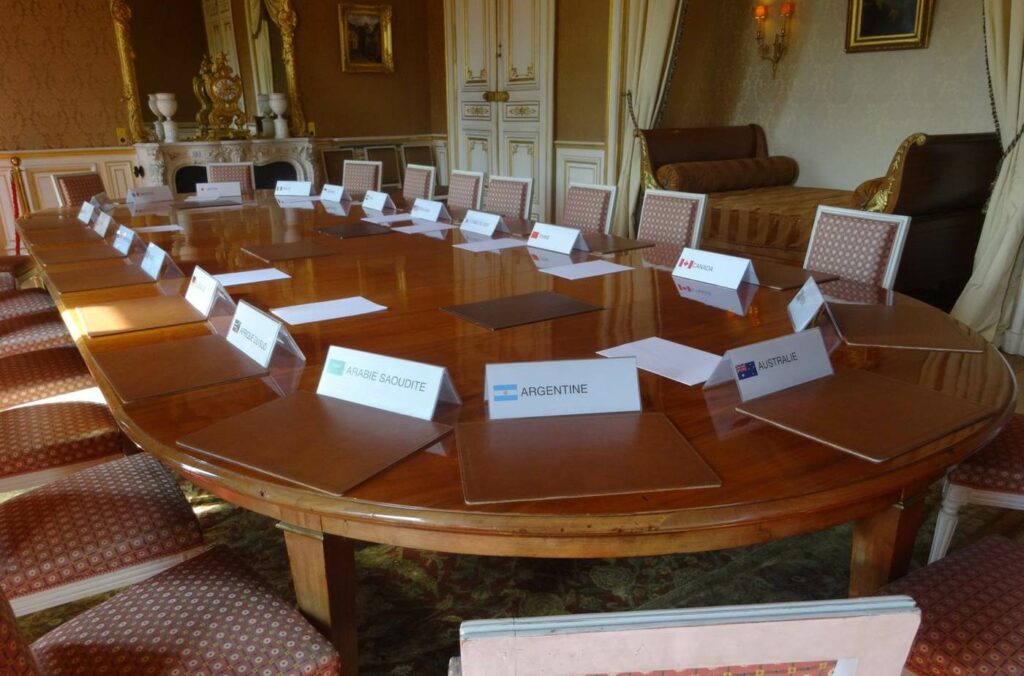
L’Établi IDP is the cross-cutting teaching method of the Academy of Diplomatic Professions. There, learners test and work on their diplomatic practice using constructed situations, expected productions, evolving information and organised feedback on the action.
Simulation is a structuring means. L’Établi also includes preparation, writing workshops, interview practice, briefing, analysis, negotiation, observation, feedback from experience, evaluation and regulation.
Practical simulation is the workbench of the artisan of peace. The other person is never the material to be worked on. Learners work on their own practice.
A professional chain of work
Instructions → Monitoring → Interview → Analysis → Note → Briefing → Representation → Negotiation → Decision → Action → Reporting → Evaluation.
This chain is a common framework, flexible rather than rigid. Each programme selects the relevant operations; situations may require returns, interruptions, revisions and re-evaluations.
Assessment and validation
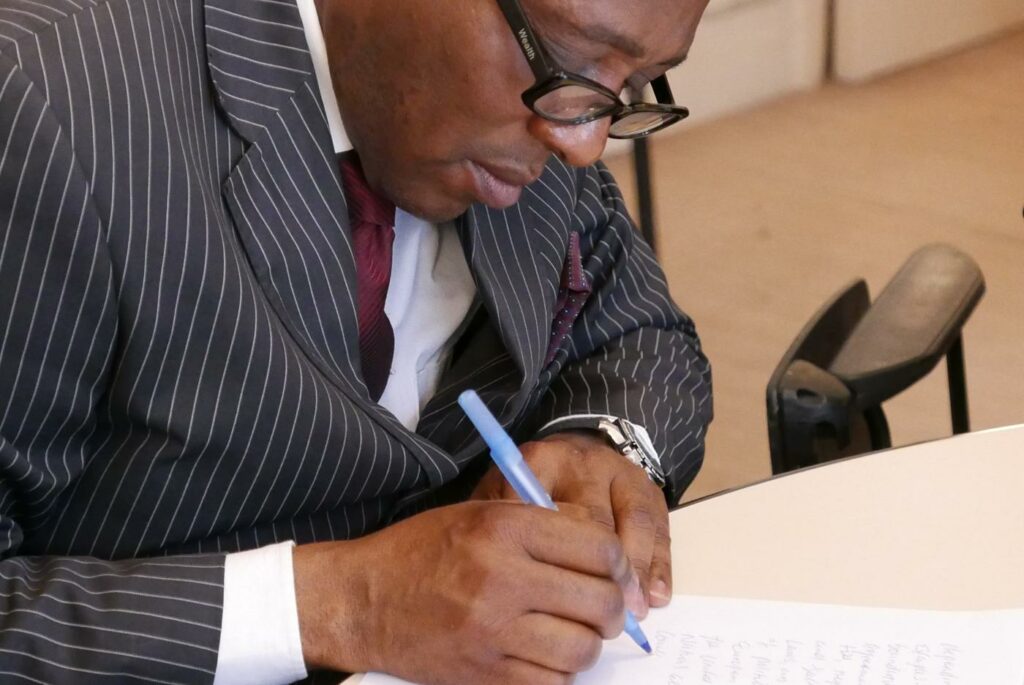
Depending on the programme, assessment is based on the knowledge drawn upon, the quality of analysis, written work and briefings, respect for the mandate, the conduct of the relationship, decisions, reporting and the ability to explain and then revisit one’s practice. The criteria and conditions of validation are communicated to participants.
Formats and organisation
Choose your professional training format
The programmes of the Academy of Diplomatic Professions connect a professional question, targeted knowledge and productions for practice. Their detailed descriptions set out the activities and progression specific to the chosen format.
| Format | Organisation |
|---|---|
| On campus in Paris | Scheduled sessions, workshops and simulations. |
| Within your organisation | Programme framed with the commissioning body, on quotation. |
| Live online | Live, in front of one’s screen, with the lecturer and the group. |
| Online, with individual mentoring | Courses, resources and personal work supported by an educational mentor. |
Tailor-made programmes for your institution
An institution, an organisation or a team can request a programme designed around its missions, its responsibilities and the professional situations to be worked on.
The Institute examines with you the objectives, the participants, the prior learning to draw on, the exercises and the expected productions. The path may combine targeted teaching, workshops, simulations and feedback on practice.
Examples of situations: taking up a post, representation, negotiation, international coordination or crisis management.
The content, duration, calendar, venue or online format are agreed when the programme is framed. A teaching and financial proposal is drawn up on quotation.
Discuss your project
Describe your responsibilities, the situation you wish to work on and the format envisaged. The Institute helps you define the right programme.
Present my project →