Emmanuele di Salvo
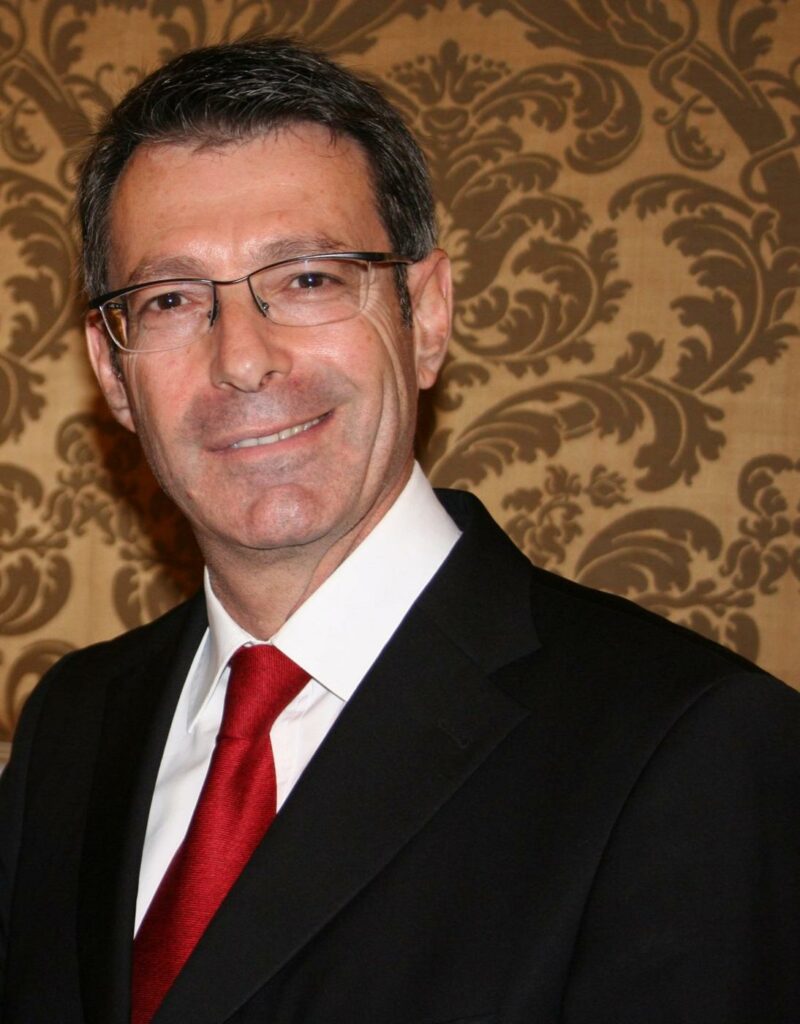
President and Founder of the Institut Diplomatique de Paris
Situated discernment
Emmanuele di Salvo, President and Founder of the Institut Diplomatique de Paris, is a specialist in the educational sciences and in foreign affairs. His approach connects diplomatic sciences and practices, discernment and educational mentoring.
Emmanuele di Salvo’s path took shape gradually, through very different professional experiences, returns to study, encounters, teaching, research, creations and breaks that could sometimes seem unrelated to one another.
Coming from civil society, and more particularly from the business world, Emmanuele di Salvo held various professional responsibilities before returning to university studies in the educational sciences and international negotiation. He then turned to teaching and research in the educational sciences. In particular, he conducted research on collective intelligence, which he would develop under the name “Intelligences Unies” (United Intelligences).
This diversity finds its meaning in the connections woven between the different stages of his path. Over time, some earlier experiences shed light on later ones; new encounters lead him to re-read what came before.
Encounters that transform
The educational sciences hold a decisive place in this journey.
There, Emmanuele di Salvo encountered in particular Edgar Morin’s complex thought, Michel Vial’s work on subject-to-subject evaluation and professional accompaniment, and Nicole Caparros-Mencacci’s work on acting in situation, kairos and mētis.
This training was then extended in his university practice. Michel Vial entrusted him with his courses, which Emmanuele di Salvo taught alongside his courses in international negotiation.
The teaching of Michel Vial, whose disciple he was, remains a reference in his approach to subject-to-subject evaluation, particularly in professional human relationships and acting in situation.
These experiences gradually shaped a way of thinking and acting: connecting what seems separate, welcoming complexity, questioning action, evaluating in order to revisit, accompanying without taking the person’s place.
This story was also marked by his encounter with Stéphane Hessel, patron of the founding of the Institut des sciences diplomatiques in 2010.
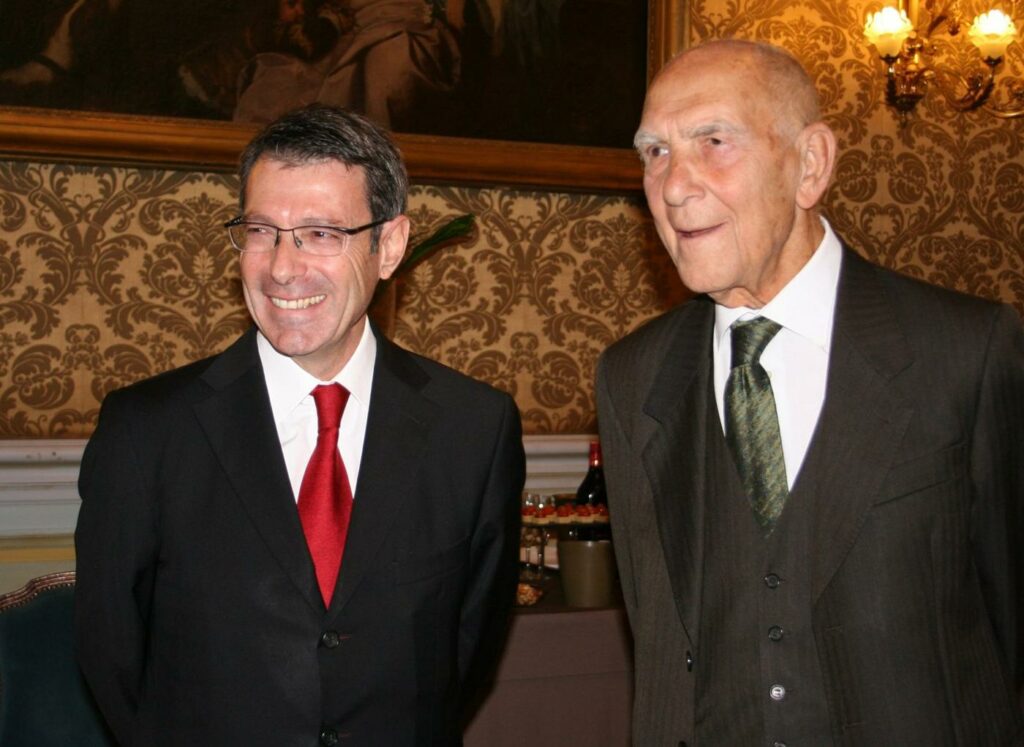
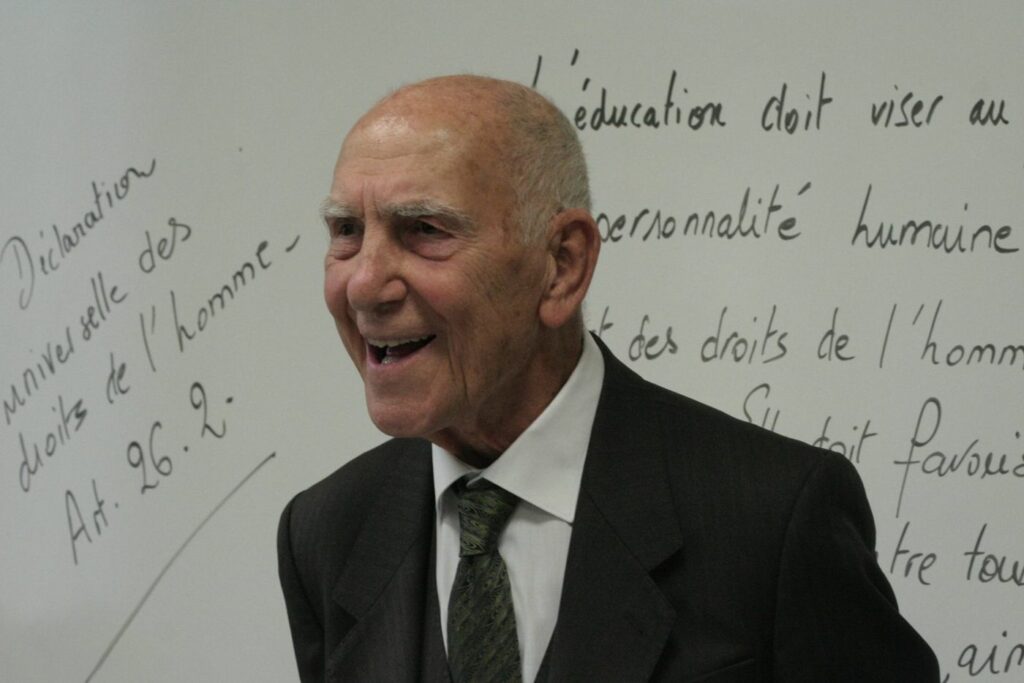
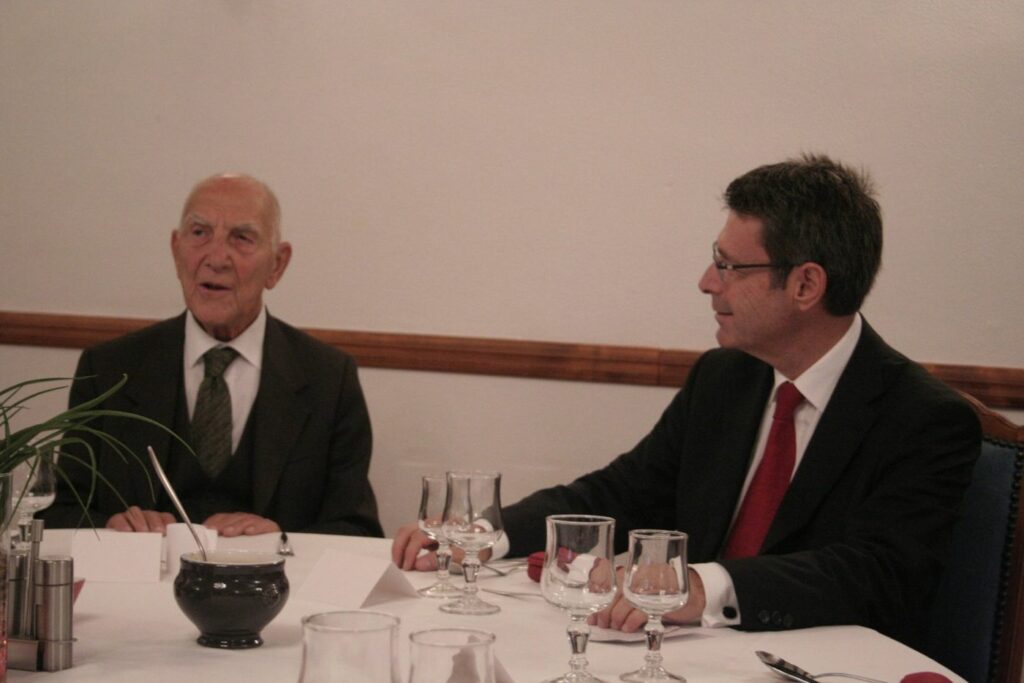
A personal formula expresses the way Emmanuele di Salvo now re-reads these encounters:
“Providence is when preparation meets opportunity. Providence is an encounter.”
Providence can thus manifest itself in an encounter with a person, a thought, a situation, an experience or something unexpected that shifts what one thought one knew.
An intuition: Diplomatic Sciences
The creation of the Institute in 2010 also arose from an encounter between several worlds: the educational sciences, international negotiation, teaching, research and the practice of diplomatic simulation.
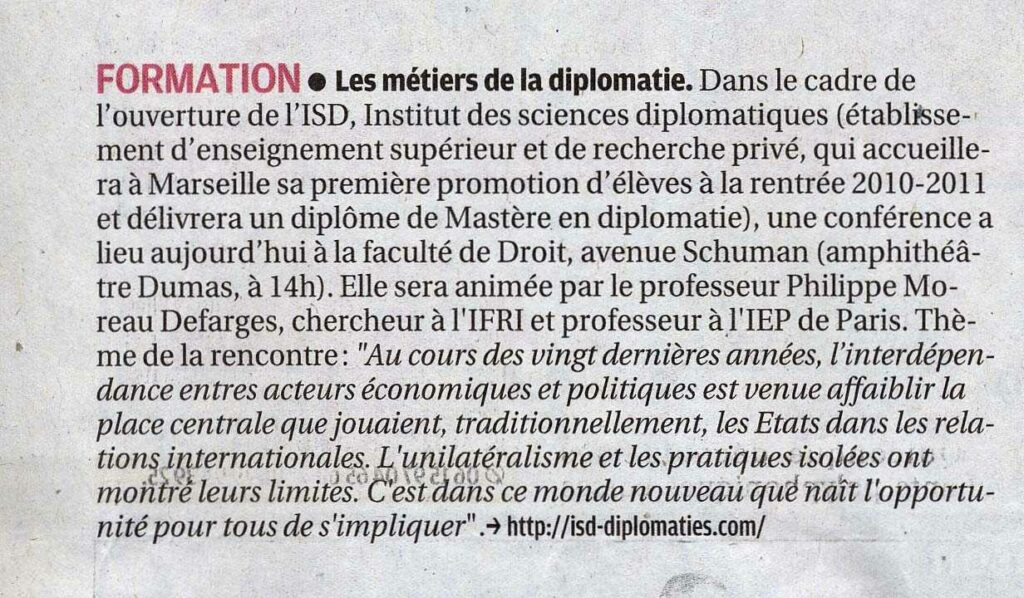
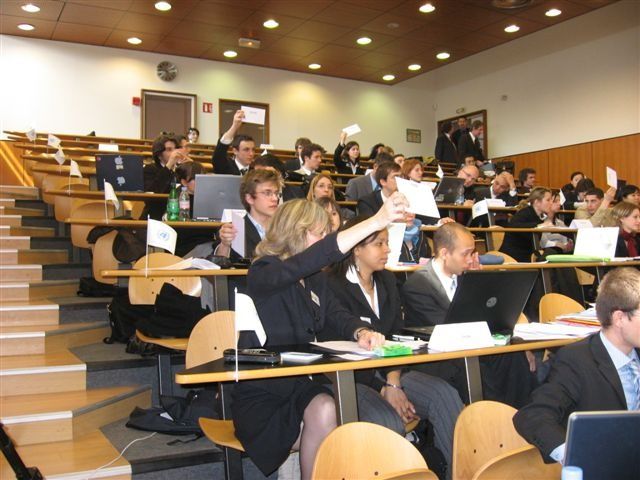
The first name chosen - Institut des sciences diplomatiques (Institute of Diplomatic Sciences) - already expressed an intuition now at the heart of the project: diplomacy is both a field of professional practice and an object of study and research, whose complexity calls for several disciplines and for the constant confrontation of knowledge with experience.
The later choice of the name Institut Diplomatique de Paris accompanied the establishment and development of the institution in Paris. The intuition of Diplomatic Sciences remains.
Today, it has explicitly regained its place in the Institute’s identity:
INSTITUT DIPLOMATIQUE DE PARIS
Diplomatic Sciences
This return comes from a re-reading: the Institute affirms what it has become while reconnecting with the intuition that helped bring it into being.
Re-reading one’s own path
This notion of re-reading takes on a particular depth in the founder’s personal journey.
His closeness to the Benedictine tradition and his path towards oblature at the Abbey of Saint-Pierre de Solesmes, begun in 2025, invite him to look anew at the experiences that came before.
Elements that had until then been separate - complexity, reliance, evaluation, accompaniment, negotiation, discernment, transmission - can then be re-read in the relationships that unite them.
The Benedictine experience opens a new reading of this path and invites him to reinvent its continuity.
This reflective approach remains open, attentive to the meaning that may still be discovered along the way.
From discernment to action
This re-reading now informs the research conducted on Diplomatic Discernment Guided by Wisdom, the Star of Discernment and Contemplative Diplomacy.
They extend older concerns: how can one understand a complex situation without reducing it? How can one remain involved while taking the necessary distance? How can one truly listen? How can one decide when knowing and analysing are no longer enough? How can one act and then reflect on one’s action?
The Benedictine journey helps to deepen this questioning in a way of being in the world. The work conducted at the Institute transposes it to the field of Diplomatic Sciences.
This work continues.
Each act of discernment ends in a decision; the capacity to discern never ends.
“With the heart, to serve”
One thread has run through this story from the beginning.
In his Founder’s Message, published since 2010 and kept essentially in its original wording, Emmanuele di Salvo already wrote that the Institute had been:
“created with the heart, to serve.”
These words predate the formalisation of Diplomatic Discernment Guided by Wisdom, the Star of Discernment and Contemplative Diplomacy.
Time, experiences and encounters have given them another depth.
The words have remained; the way of looking at them has changed.
Serving finds a new resonance today in this re-reading of the path travelled. The heart opens onto a quality of presence, attention and listening to others.
Serving also means leading: authority is a service there, and governing begins with listening. Listening is the first moment of the Star of Discernment. Leading the Institute means keeping this conviction alive: to educate is an act of hope.
Peace as an aim
This path connects what Emmanuele di Salvo has been, what he has become, what he is today and what he still seeks to become.
It also gives meaning to the continuity of a project begun in 2010: conducting research, teaching, educating, training, transmitting and creating spaces in which others can in turn exercise their discernment and take responsibility for their action.
One aim runs through the Institute’s history:
That the world may have peace.
On the occasion of Pope Leo XIV’s visit to France, one phrase particularly inspired us: “That the world may have life.”
The Institut Diplomatique de Paris wished to let this hope resonate with its own vocation.
For if diplomacy is the art of dialogue between peoples, of understanding between cultures and of the patient search for solutions to disputes, it carries within it an essential ambition: building the conditions of peace.
It is in this spirit, and echoing the motto chosen for Pope Leo XIV’s visit to France, that the Institut Diplomatique de Paris adopts its signature:
That the world may have peace.
This sentence simply expresses our reason for being: to train, transmit, engage in dialogue and act so that diplomacy remains, wherever it is needed, in the service of peace.