The Institut Diplomatique de Paris preparation for diplomatic and international careers.
At the end of the programme, each candidate presents their letters of credence before a jury of former diplomats.
At a glance
- Seven examinations prepared: INSP, French Foreign Ministry (Quai d’Orsay), European institutions, UN.
- Mock oral exams for all participants, before former diplomats.
- From €590, free placement assessment.
Request my free assessment → See the options ↓ Frequently asked questions ↓
2026-2027 session: what is open
- Oral only : for candidates eligible for the oral exams of the 2027 session, including the Foreign Affairs Secretary examination. Registration open.
- Written training : for the INSP written exams of March 2027. Twenty marked mock exams, from Saturday 28 November 2026 to Friday 5 March 2027. Registration open, including along the way. See the calendar ↓
- Placement assessment : free, all year round.
- Summer preparation and full programmes : for the 2028 session, registration from spring 2027.
The calendar of each examination depends on its annual official order.
INSP 2027 Written training calendar
| Cycle | Dates |
|---|---|
| 1 - Foundations | Saturdays 28 November, 5, 12 and 19 December 2026, then a take-home exam the week of 21 December |
| 2 - Deepening | A take-home exam the week of 28 December, then Saturdays 2, 9, 16 and 23 January 2027 |
| 3 - Exam conditions | Saturdays 30 January, 6, 13, 20 and 27 February 2027 |
| 4 - Final mock exam | From Monday 1 to Friday 5 March 2027, in real conditions |
Each cycle covers the five written papers of the examination. Each paper is marked and annotated, and each exam is followed by a correction seminar by videoconference, on Wednesday evening. The official written exams take place the week of 15 March 2027.
A preparation designed by a school of diplomacy
The Institute’s Exam Preparation prepares candidates for the exams that open careers in the State’s external action, the European institutions and international organisations. Beyond passing exams, it already trains the way of thinking, writing and speaking that these professions require.
Target skills
- Master the required knowledge: international culture, European affairs, French institutions, justice and the rule of law.
- Write an essay and draft a briefing note methodically, within the time allowed.
- Convince orally, handle questions and defend a position.
- Show a diplomat’s discernment in every situation.
The examinations prepared
| Examination | Career outcome |
|---|---|
| INSP, general track | State administrator |
| INSP, Oriental track | State administrator, diplomatic career |
| Foreign Affairs Secretary, general track | Ministry for Europe and Foreign Affairs |
| Foreign Affairs Secretary, Oriental track | Same ministry, with a regional specialisation and a rare language |
| Chancery Secretary | Consular and administrative functions in embassies |
| European competitions (EPSO) | Administrator in the European Union institutions |
| UN Young Professionals Programme | United Nations Secretariat |
Participants and admission
- Students in the final year of a bachelor’s, master’s or grande école programme.
- Graduates preparing for an examination, including after a first attempt.
- Working professionals who wish to move into diplomatic and international careers.
Full programmes: a three-year higher education degree, or enrolment in the final year of a bachelor’s degree. Chancery Secretary programme: the baccalaureate. The conditions for sitting each examination (nationality, degree, age) are set by its official rules; the Institute helps you check them.
Admission is based on an application file and an admission interview. The free placement assessment is recommended: an online test followed by a thirty-minute interview with a former diplomat, to assess your level and choose your option.
The options
| Option | Duration | Organisation |
|---|---|---|
| Online summer preparation | From June to September | Video lessons, at your own pace, three marked assignments |
| Written training | INSP 2027: from 28 November 2026 to 5 March 2027 | Twenty online mock exams, correction seminars |
| Online programme | From October to the oral exams, twenty days | Live online, or online with individual support |
| Comprehensive programme | From June to the oral exams | The summer preparation, twelve live online days and eight on-site days in Paris |
| Chancery Secretary programme | From January to the oral exams, ten days | Six online days and four days in Paris, or entirely online |
| Oral only | Between eligibility and the oral exam | Three mock oral exams, on site in Paris or by videoconference |
The days in Paris are dedicated to what is best experienced in person: the launch day, the written mock exams and the mock oral exams. Candidates enrolled entirely online follow them by videoconference.
Programme
- General culture and international affairs : major contemporary issues, the history of international relations and geopolitics.
- European affairs : the institutions, policies and current affairs of the Union.
- Institutions, justice and the State’s external action : the Fifth Republic, the organisation of justice, public law, the conduct of foreign policy.
- Economics and public finance, for the INSP and EPSO.
- Written method : essay, summary note, questionnaires, time management.
- Languages : method and practice for the English and second-language papers.
- The oral exam : the interview with the jury, presenting one’s background, current affairs questions, stress management.
- Examination-specific modules : regional knowledge and the method for the Oriental track language papers, the EPSO tests, the competencies assessed by the UN. The rare language itself is expected to be already mastered.
Working methods and mentoring
- Personal feedback : each paper is marked and annotated, with advice for progress.
- Mock exams in real conditions, followed by correction seminars.
- Mock oral exams for all participants, for every participant, before a jury of former diplomats and successful candidates of these examinations.
- The disputatio : defending a position against objections, as before a real jury.
- A commented current-affairs watch, every week.
- A mentor (comprehensive programme): a successful candidate or a diplomat who supports you throughout the year.
Assessment and progress
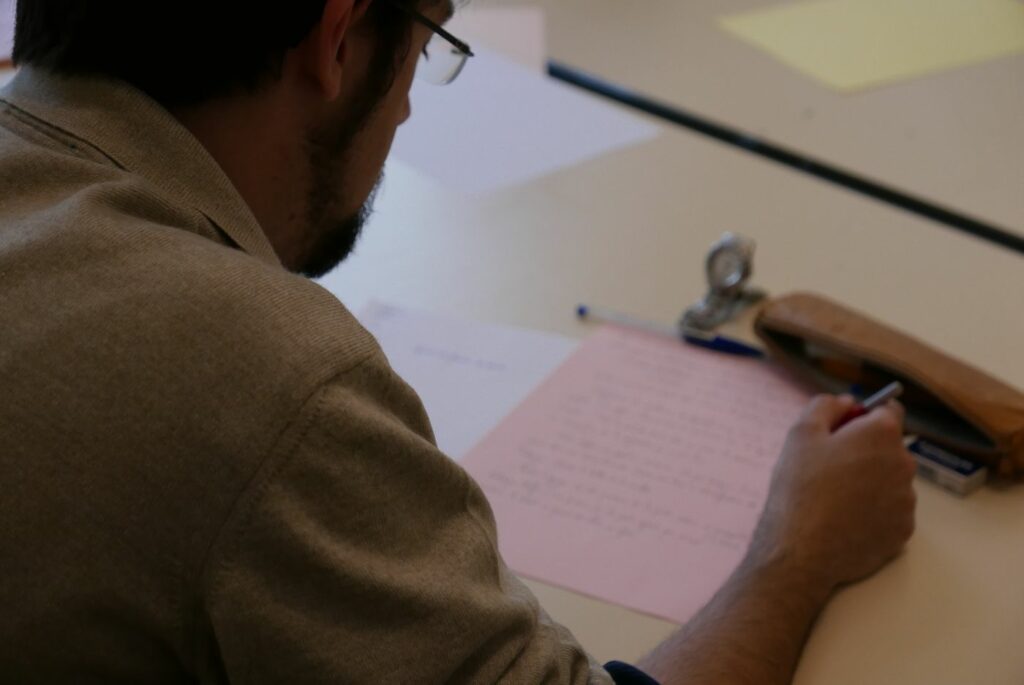
- Mock exams are marked according to the official grading scale of each examination.
- An individual mid-term review takes stock of your progress and priorities.
- The letters of credence : at the end of the programme, each candidate takes a final mock oral exam before the jury of former diplomats, then receives a written review before the exams.
Document awarded: a certificate of completion issued by the Institut Diplomatique de Paris.
Fees 2026-2027
From €590. View the fees
Placement assessment: free.
Preferential terms
- “Second chance” guarantee : a candidate who is not declared eligible may re-enrol the following year at half price.
- The Institute’s preferential terms apply, including the launch offer. One discount applies per enrolment: the most favourable.
- Interest-free instalments, for the programmes.
Payment
Payment is made in full. Interest-free instalments are available for the programmes: 30% on enrolment, then monthly payments, with the balance paid before the written exams.
The Institute’s Exam Preparation is independent of the administrations and institutions that organise these examinations. Success depends on the number of posts opened each year, which remains limited: the Institute commits to the quality of the preparation.
Frequently asked questions
Can I follow the preparation while working?
Yes. The online options are designed to fit with professional activity or studies. Live sessions and days in Paris are communicated on enrolment, so that you can plan ahead.
How many hours per week should I plan?
In addition to the sessions, allow on average ten to fifteen hours of personal work per week for a senior-grade (category A) examination: reading, notes, practice and assignments. The placement assessment helps adjust this pace to your level.
Can I prepare for several examinations at once?
Yes. The syllabuses overlap widely (international culture, European affairs, institutions, oral). The programmes cover all seven examinations; we advise choosing one main examination and one or two related ones.
Does my degree allow me to register for the examination?
Degree, nationality and age requirements are set by the official rules of each examination. If your degree is an institutional degree, an equivalence request may be necessary. The Institute helps you check this before you enrol.
What happens if I am not declared eligible?
The “second chance” guarantee allows you to re-enrol in the same option for the following session, at half price, upon presentation of the official result.
Is the rare language of the Oriental track taught?
The preparation focuses on the method for the language papers and on regional knowledge; the language itself should already be mastered.
Preparing for your first post
Start with the free placement assessment: it helps you assess your level and choose the right option.